

Alpine Decision Support
Operational risk assessments for Swiss alpine access routes. Because “open” doesn’t mean safe.
Request a Pilot Discussion
Alpine Access Intelligence for Mobility and Hospitality Operations
AI EVACS provides structured operational advisory intelligence for organizations coordinating travel through alpine mountain passes.
Request a Pilot Discussion
In high-altitude environments, official road status does not always reflect real operational exposure. AI EVACS introduces an additional advisory layer that helps operators evaluate routing conditions before instability develops.
Why This System Exists
Road authorities determine whether a pass is legally open or closed. However, the responsibility for routing decisions remains with those coordinating alpine travel.
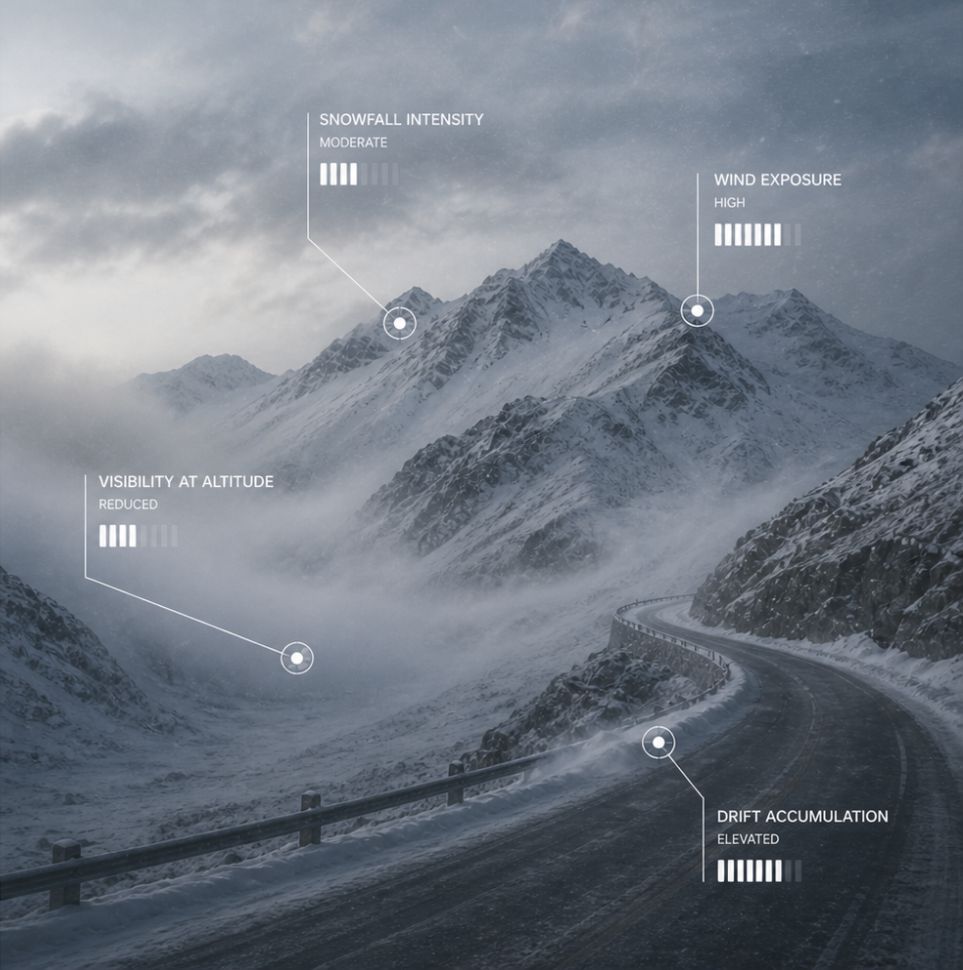
Between “open” and “closed” lies a zone of operational uncertainty. Environmental instability can escalate before infrastructure closures occur. During this period, routing decisions must be made without structured operational context.
AI EVACS was developed to formalize that decision space.
The Operational Reality
In alpine regions:
- Conditions change rapidly at altitude
- Infrastructure closures may lag behind environmental instability
- Routing decisions are often made under time pressure
- Operational errors can create reputational and logistical consequences
In practice, routing decisions are most often made by transfer companies, private chauffeurs, shuttle operators, concierge teams and travel coordinators.
AI EVACS is designed to support this real operational environment.
Structured Operational Advisory
AI EVACS does not replace operational judgement. Final routing decisions remain the responsibility of transport operators and coordinating organizations.
The system provides structured advisory intelligence that:
- Supports route planning before departure
- Identifies emerging instability
- Provides context for operational decisions
- Documents exposure conditions at the time of routing
Operational Dashboard
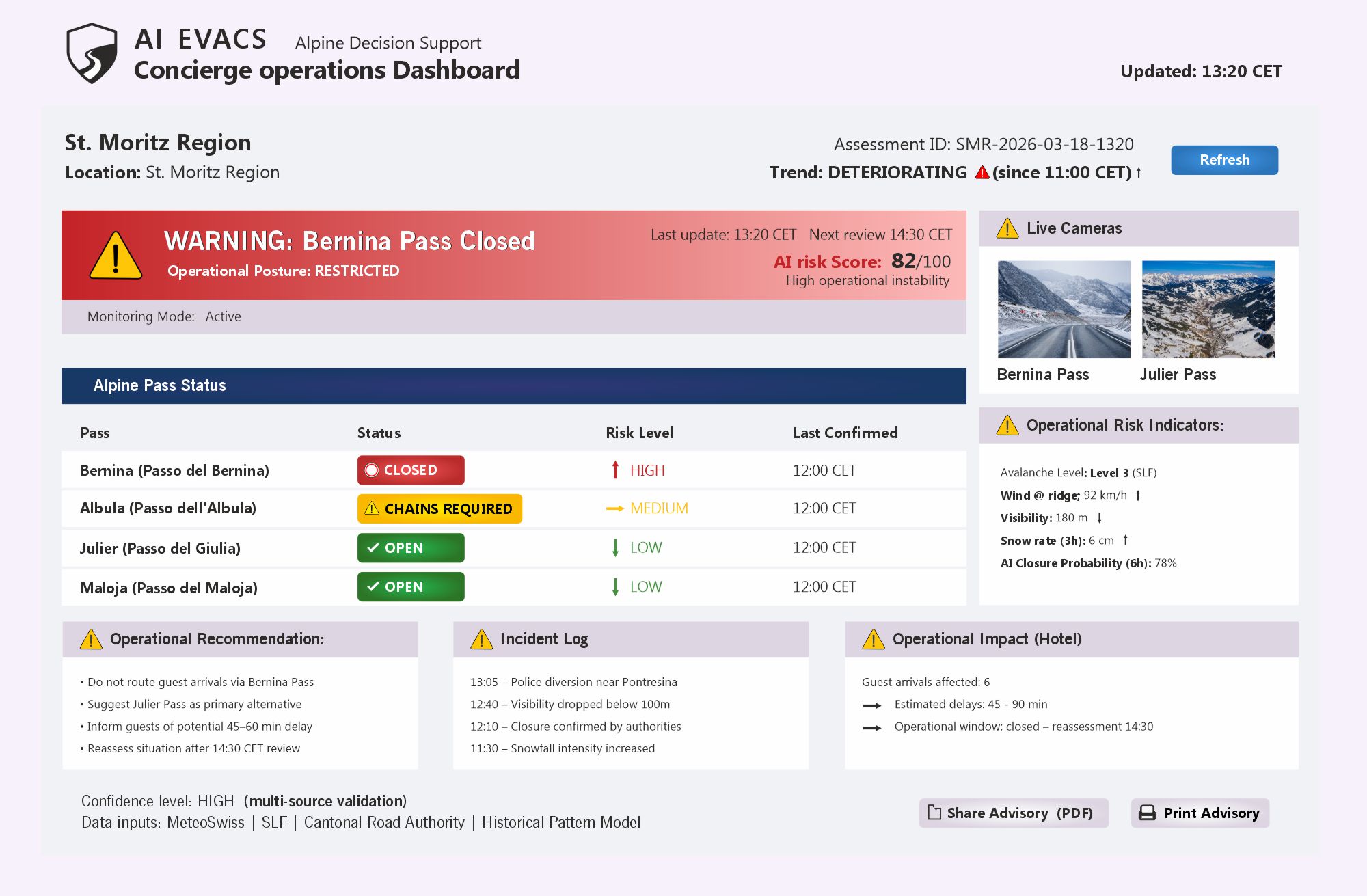
The AI EVACS dashboard provides a clear overview of alpine routing conditions across monitored passes.
For each route the system displays:
- Operational status
- Risk score (0–100)
- Trend direction
- Latest assessment timestamp
- Next scheduled review
The dashboard translates complex environmental signals into clear operational context for routing decisions.
Structured Travel Advisories
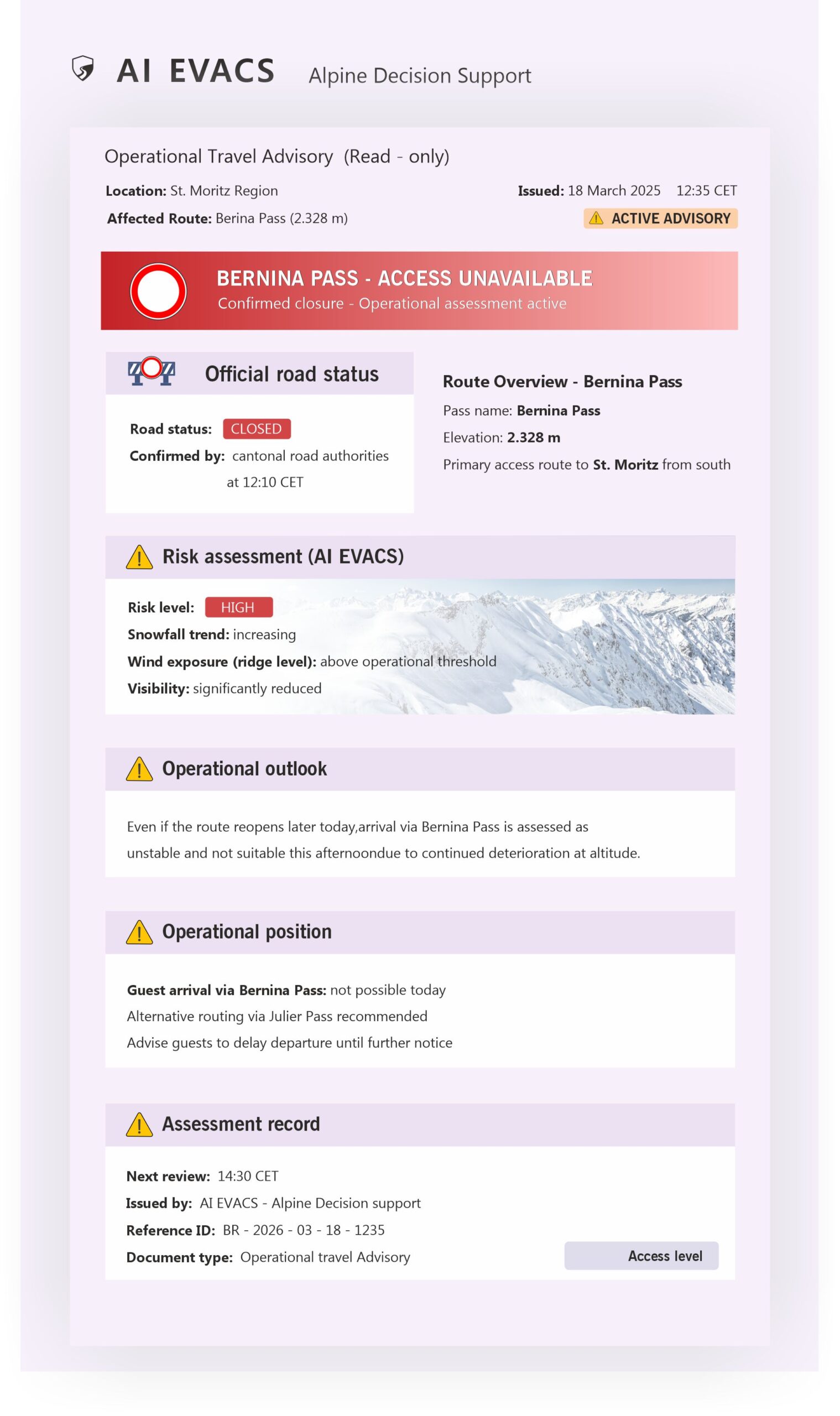
AI EVACS produces standardized operational advisory documents designed for real-world use.
Each advisory includes:
- Affected route and location
- Official road authority status
- AI EVACS exposure assessment
- Operational outlook
- Defined operational position
- Next reassessment interval
Advisories can be used for internal coordination, routing justification and communication with hotels or guests.
Alpine Risk Modelling
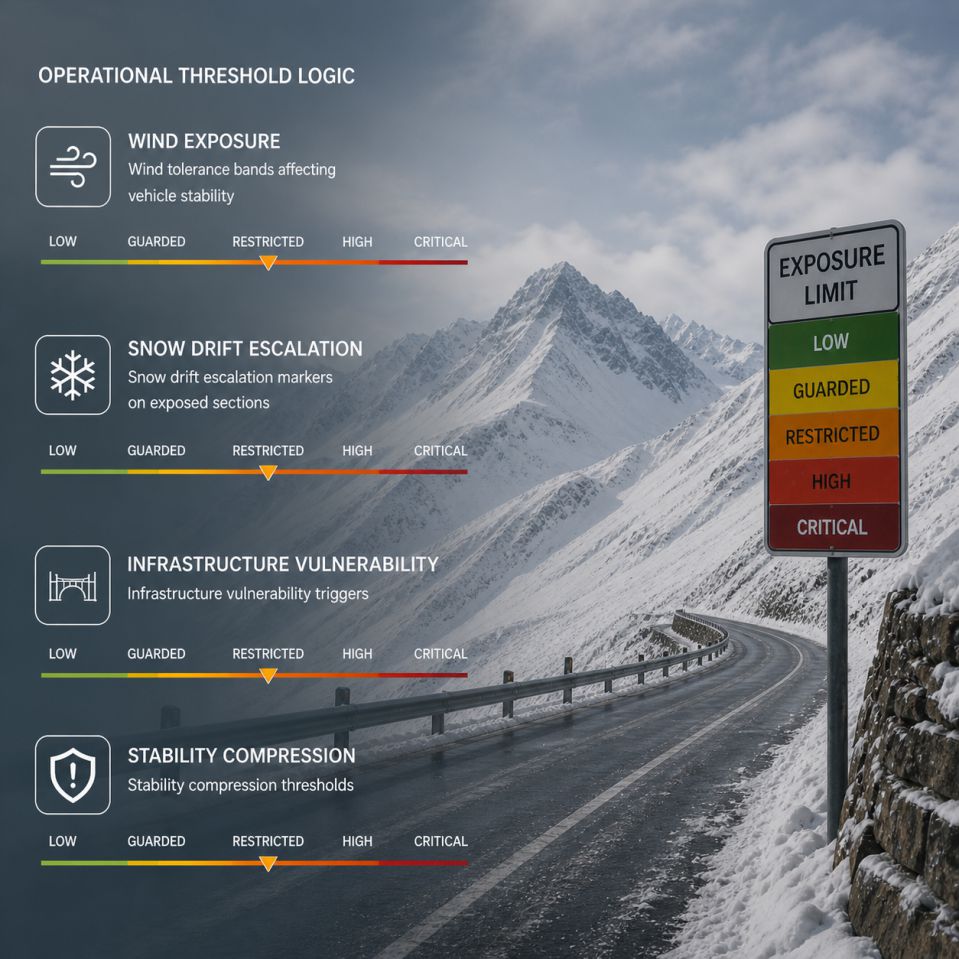
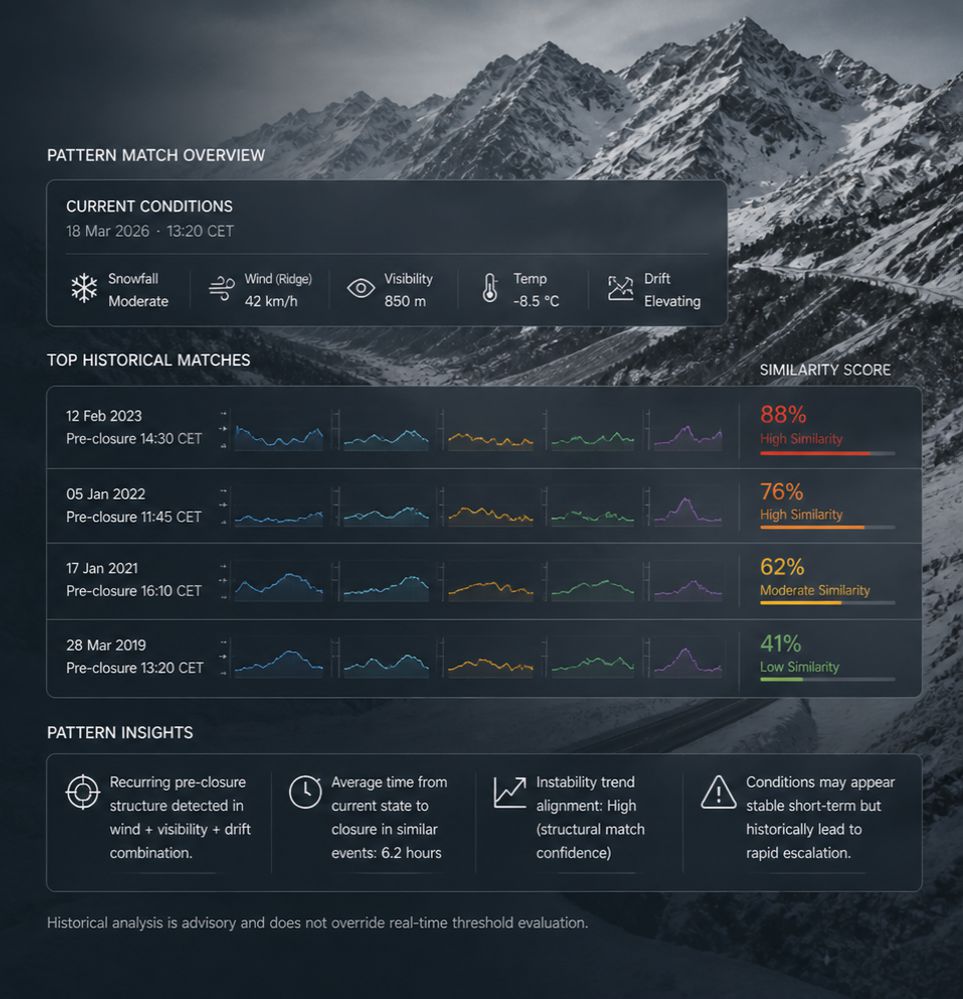
The system evaluates alpine instability through a structured operational sequence:
- Environmental signal monitoring
- Operational threshold logic
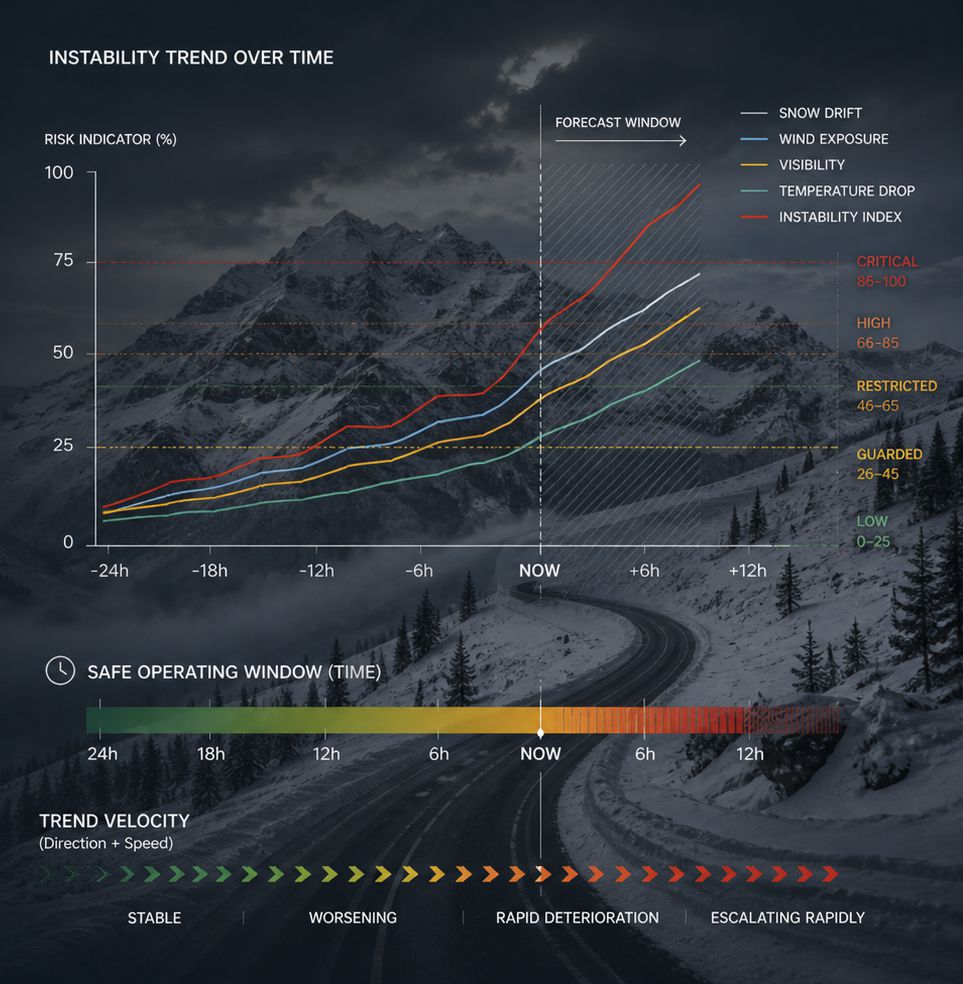
- Trend velocity analysis
- Historical pattern comparison
- Authority status integration
This layered approach helps identify exposure conditions before official infrastructure closures occur.
St. Moritz Alpine Pilot
AI EVACS is currently operating a limited pilot program with selected partners in the St. Moritz region.
The pilot focuses on real operational use across key alpine access routes:
The objective is validation under real winter conditions.

Participation
Participation in the Alpine Pilot Program is intentionally limited to a small number of operational partners. Selected participants gain early access to structured advisory intelligence for real alpine routing decisions.
Book a Call